Island Hydration is our IV drip for dehydration in Krabi. It’s a simple, gentle drip of fluid and electrolytes for when the heat, the sun or a stomach bug has left you drained and you can’t drink enough to catch up.
A registered nurse gives every drip, at our Ao Nang clinic or at your hotel, villa or bungalow.
Why you might need an IV drip for dehydration in Krabi
Krabi is hot and humid all year, and most visitors aren’t used to it. You lose more fluid than you notice, and it adds up quickly:

- Sun and heat: long beach days, island-hopping trips and kayaking with little shade
- Exercise: rock climbing at Railay, hiking viewpoints or running in the heat
- Travel tummy: diarrhoea and vomiting from food or water your stomach isn’t used to
- Alcohol: a few drinks in the sun dehydrate you faster than at home
- Travel itself: long flights and transfers where you drink less than usual
Mild food poisoning is one of the most common reasons guests book this drip. When you’re vomiting or have diarrhoea, sips of water often can’t keep up with what you’re losing.
Signs your body needs fluids
According to the NHS guide to dehydration, common signs include:
- Feeling thirsty, with a dry mouth or lips
- Dark yellow, strong-smelling urine, or passing urine less often
- Feeling dizzy, lightheaded or tired
- Headache
- Muscle cramps
Start with water and oral rehydration salts from a pharmacy or 7-Eleven. If you can’t keep them down, or you still feel unwell after a few hours, an IV drip can help replace fluids directly.
What’s in the Island Hydration drip
Island Hydration keeps things simple:
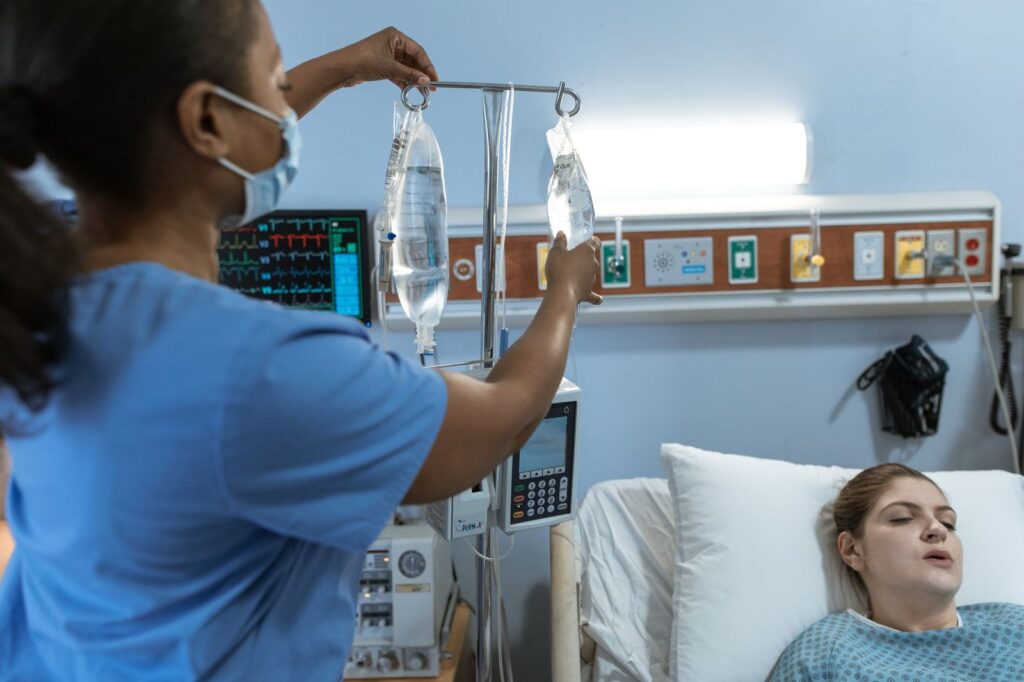
- Balanced saline, 1,000 ml: a full litre of fluid, given straight into a vein
- Electrolytes: to replace the salts lost through sweat, vomiting and diarrhoea
- B-complex vitamins
Before your drip, the nurse runs a short health screening. They ask about your symptoms, how long you’ve been unwell, your medical history, medicines and allergies, and check your blood pressure and pulse. They may adjust the formula, or recommend a different drip if it suits you better.
What to expect
The drip takes 30 to 45 minutes. You can lie back, rest or sleep while the nurse stays with you. Many people feel less dizzy and more like themselves by the end, though recovery from a stomach bug can take a day or two, and the drip doesn’t treat the infection itself.

If you’d rather not leave your room, our hotel and villa IV drip visits bring the same drip to you. For heat exhaustion, an IV drip in Krabi can help you rehydrate, but get out of the sun and cool down first.
For tips on eating, drinking and recovering from a stomach bug, message us and our nurse can talk you through it.
Who shouldn’t have this drip
The nurse may decline or postpone a drip if you have heart failure, kidney disease or are on a fluid-restricted diet, or if you’re pregnant and haven’t checked with your doctor. Tell the nurse about all your medicines and conditions, even ones that seem unrelated.
When to go to hospital instead
Some stomach bugs and heat illnesses need a doctor, tests or medicine that a drip can’t provide. Go to hospital, or call 1669 for an ambulance, if you have:
- Blood in your stool or vomit, or black, tarry stools
- A high fever, especially with a rash or stiff neck
- You can’t keep water down for 24 hours
- Diarrhoea lasting more than a few days
- Severe stomach pain, or pain that keeps getting worse
- Confusion, fainting, a racing heart, or very little or no urine
- A very high temperature with confusion after time in the sun, which can mean heatstroke
Children, older people, pregnant women and anyone with a long-term health condition should see a doctor sooner. Dengue fever is also found in Thailand: a high fever with severe headache, eye or joint pain needs a blood test, not just fluids.
The nearest hospitals are Wattanapat Hospital Ao Nang, Bangkok Hospital Krabi and Krabi Hospital (government). If our nurse spots red flags, they’ll tell you to go and won’t start the drip.
Frequently asked questions
Can I get an IV drip for food poisoning in Ao Nang?
Yes, for mild food poisoning where the main problem is losing fluids. The nurse checks your symptoms first and will send you to hospital if anything points to a more serious infection.
Is IV hydration in Ao Nang better than drinking water?
If you can drink and keep fluids down, oral rehydration salts usually work well. A drip is useful when vomiting or diarrhoea means you can’t keep up, or you’re too drained to drink enough.
Can I go back in the sun after the drip?
Take it easy for the rest of the day. Stay in the shade, keep drinking water and oral rehydration salts, and save the long boat trip for tomorrow if you can.
Will my travel insurance cover it?
It depends on your policy and the reason for the drip. We give you an itemised receipt to send to your insurer. Some insurers also ask for a doctor’s note. Read more in our guide to travel insurance and IV drips in Thailand.
How do I book?
Use our booking form or message us on WhatsApp with your symptoms and where you’re staying.
Photo: Zane Persaud on Unsplash