
Krabi is hot and humid all year, and from March to May, Thailand’s hot season, it gets hotter still. Heat exhaustion is common among visitors who arrive from cooler countries and go straight into boat trips, hikes and climbing.
Most cases get better quickly with rest, shade and fluids. This guide covers the signs, first aid, the red flags that mean hospital, and where a heat exhaustion IV drip in Krabi fits in. In short: once you’ve cooled down and you’re clearly improving, a drip can help you rehydrate. It’s never a substitute for emergency care.
What heat exhaustion is
Heat exhaustion happens when your body overheats and loses too much water and salt through sweat. Humidity makes it worse, because sweat doesn’t evaporate well, so your body cools less efficiently.
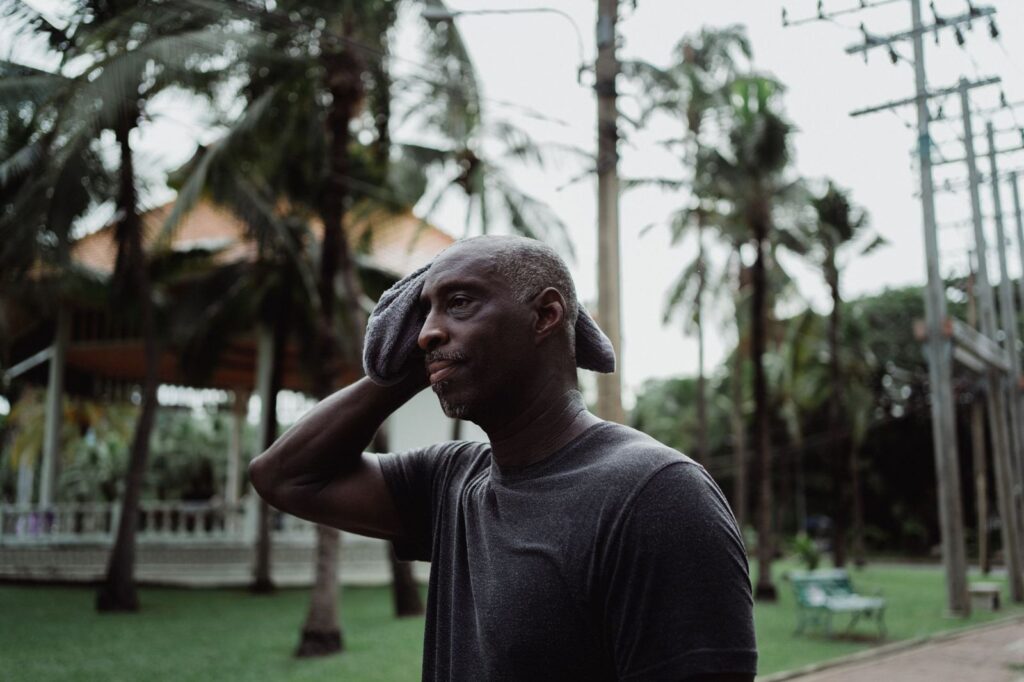
Cleveland Clinic lists hard exercise in the heat and not yet being used to a hot climate among the main risk factors. It notes that the body adapts gradually over time, which is exactly what a two-week holiday doesn’t allow.
If it isn’t dealt with, heat exhaustion can progress to heatstroke, which is a medical emergency.
Signs of heat exhaustion
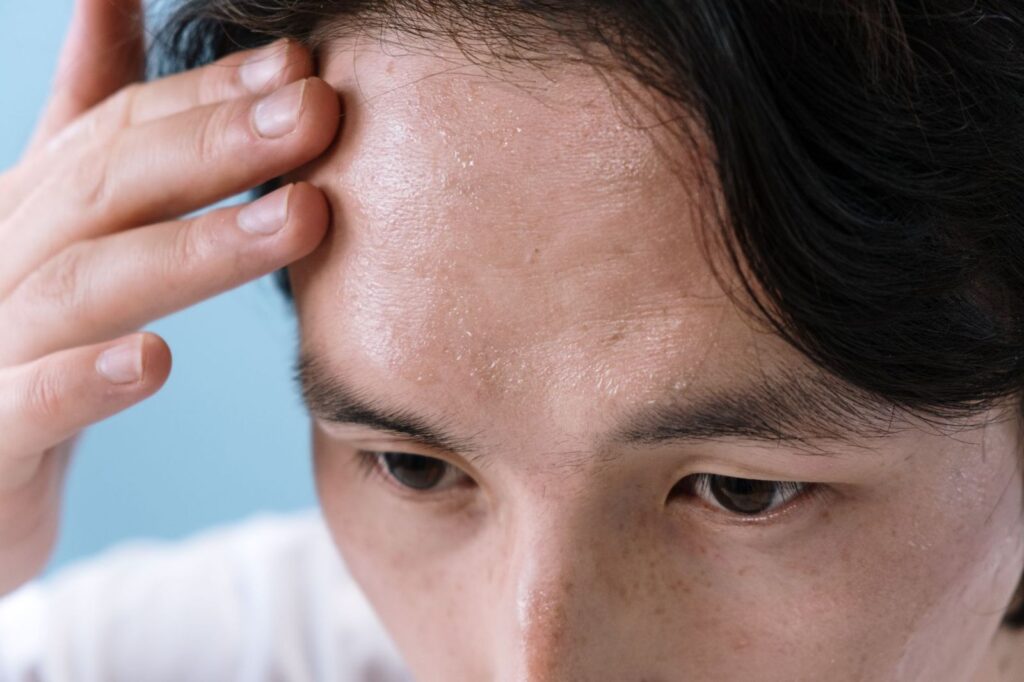
- tiredness and dizziness
- headache
- feeling or being sick
- heavy sweating, with pale, clammy skin
- cramps in the arms, legs or stomach
- a high temperature
- being very thirsty
- feeling irritable
The signs are similar in adults and children. Cleveland Clinic adds that a fast heart rate is common and that muscle cramps are often an early warning sign.
First aid for heat exhaustion
The NHS advises four steps if someone has signs of heat exhaustion:
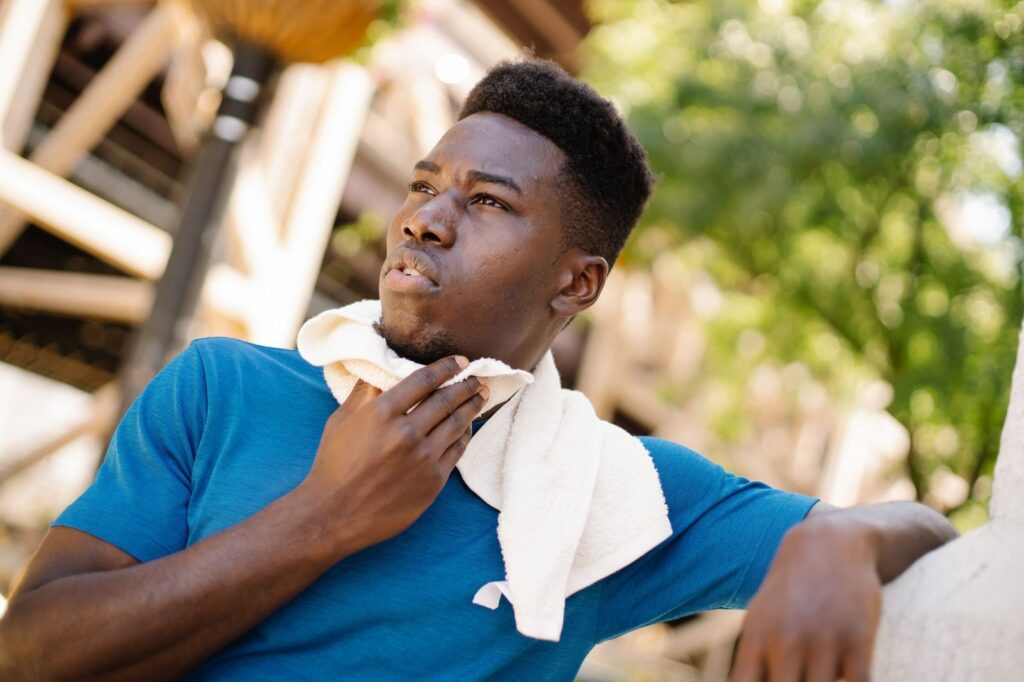
- Move them somewhere cool, such as air-conditioning or deep shade.
- Remove unnecessary clothing, such as a jacket, shoes or socks.
- Give them plenty of water. A sports drink or oral rehydration sachet, sold in every Thai pharmacy and 7-Eleven, also works well.
- Cool their skin: spray or sponge them with cool water and fan them. Cold packs under the armpits or on the neck help too.
Stay with them. The NHS says they should start to cool down and feel better within 30 minutes. If they don’t, get medical help.
Cleveland Clinic notes that most people need a day or two to feel back to normal, so take it easy afterwards rather than going straight back out into the sun.
Heatstroke red flags
Heatstroke means the body can no longer cool itself. Call 1669 immediately if someone:
- is still unwell after 30 minutes of rest, shade and fluids
- has a very high temperature
- has hot skin that isn’t sweating and may look red
- has a fast heartbeat, fast breathing or shortness of breath
- is confused or losing coordination
- has a fit (seizure)
- loses consciousness
While you wait, keep cooling them. The NHS advises putting someone who loses consciousness in the recovery position and telling the ambulance service.
Preventing heat exhaustion on boat days
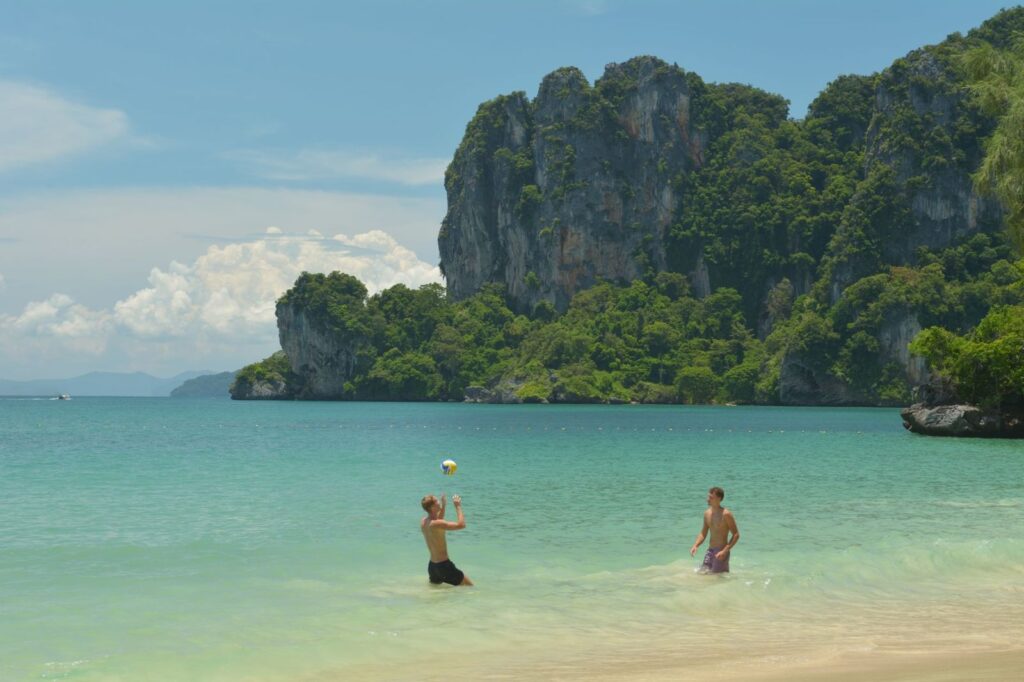
A breeze on the water hides how hot you’re getting. On island trips:

- drink small amounts regularly, before you’re thirsty
- sit under the canopy between stops, especially from late morning to mid-afternoon (the NHS suggests avoiding the sun between 11am and 3pm)
- keep alcohol for the evening; it adds to fluid loss
- wear light, loose clothing and a hat
The sun is the other risk on boat days. Our guide to sunburn in Krabi covers sun protection and burn aftercare, so we won’t repeat it here.
Preventing heat exhaustion when climbing and hiking
Railay’s limestone cliffs draw climbers from all over the world, and the viewpoint trails are steep and humid. Hard exercise in heat is a classic trigger.
- Start early and rest in the shade through the hottest hours.
- Ease in. Do shorter sessions for your first few days while your body adjusts.
- Carry more water than you think, plus an electrolyte drink.
- Stop at the first signs, such as cramp, dizziness or a pounding headache, rather than finishing the route.
- Climb with a partner who knows the warning signs.
If you’re staying on the peninsula, we visit with our IV drips in Railay service.
When an IV drip for dehydration in Krabi helps
An IV drip for dehydration in Krabi makes sense when the emergency is over: you’ve cooled down, you’re thinking clearly, but you still feel drained, headachy and can’t drink enough to catch up. That’s common after a long boat or climbing day, or if nausea makes it hard to keep fluids down.
Our Island Hydration drip gives 1,000 ml of balanced saline with electrolytes and B-complex over 30–45 minutes. Cleveland Clinic notes that IV fluids are one of the treatments used for heat exhaustion, though in more serious cases that happens in hospital, not a hotel room.
For IV hydration in Ao Nang, a registered nurse comes to your hotel or villa, or you can visit our clinic. Every drip starts with a short health screening. If the nurse finds signs of heatstroke or anything else that needs a doctor, they’ll send you to hospital rather than start a drip. When you’re ready, book a drip.
When to go to hospital instead
Go straight to hospital, or call 1669 for an ambulance, if there are any heatstroke red flags above, or if someone:
- has not improved after 30 minutes of cooling and fluids
- keeps vomiting and can’t drink
- has chest pain
- is a young child, older person, pregnant, or has heart or kidney problems and is getting worse
The nearest hospitals are Wattanapat Hospital Ao Nang, Bangkok Hospital Krabi and Krabi Hospital (government).
Frequently asked questions
Can I get an IV drip for heat exhaustion in Krabi?
Yes, for mild heat exhaustion once you’ve cooled down and are improving. Our nurse screens you first. If you have signs of heatstroke, or aren’t getting better after 30 minutes of rest and fluids, you need a hospital instead.
How long does heat exhaustion last?
With quick first aid, people usually start feeling better within 30 minutes, but it can take a day or two to feel fully normal. Avoid hard exercise and strong sun while you recover.
When is it hottest in Krabi?
Thailand’s hot season runs roughly from March to May. Humidity is high all year, so heat exhaustion can happen in any month, especially during exercise.
Is drinking water enough?
Usually, yes. Water plus an oral rehydration sachet is all most people need. A drip is an option if you’re struggling to drink, feel sick, or want to rehydrate faster after a long day in the heat.
Ready to feel better?
A registered nurse can come to your hotel or villa in Ao Nang and nearby beaches, or visit our clinic.
Photo: picjumbo.com on Pexels